
Master-planned communities are no longer designed around long commutes and isolated residential zones.
Across the country, developers are reshaping suburban living by introducing centralized commercial districts that combine housing, retail, dining, entertainment, and transit access into one connected environment.
These evolving town centers are creating vibrant neighborhoods where convenience and community interaction take priority.
Today’s homeowners are increasingly drawn to communities that support active lifestyles, reduce dependence on vehicles, and provide opportunities to live closer to everyday essentials.
From outdoor gathering areas and entertainment venues to integrated transit systems and coworking spaces, modern suburban planning now mirrors many of the advantages traditionally associated with urban living.
As these projects continue expanding in 2026, residents have a unique opportunity to benefit from enhanced amenities, stronger property values, and improved quality of life through the rise of new town center expansion, downtown mixed-use development, walkability, and the growing appeal of the walkable mixed-use development model.
What Is the New Town Center Expansion
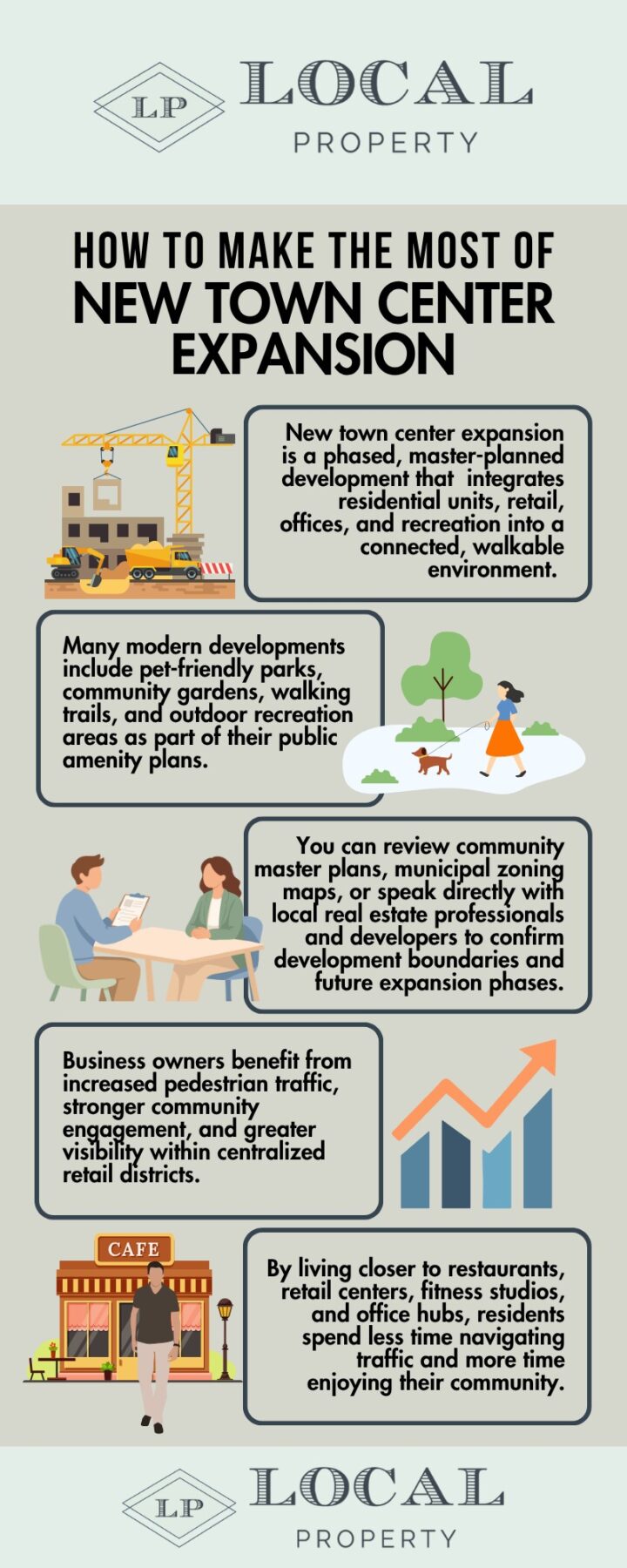
New town center expansion is a phased, master-planned development that introduces a centralized urban-style core within suburban communities. It integrates residential units, retail, offices, and recreation into a connected, walkable environment. Designed for convenience and reduced car dependence, it enhances lifestyle quality while supporting long-term community growth and accessibility.
Why Is Downtown Mixed-Use Development and Walkability Rising
The Ultimate Convenience
A walkable mixed-use development combines residential housing, office spaces, retail stores, restaurants, and entertainment into a centralized district where residents can access most daily necessities on foot.
This approach creates a vibrant, self-sustaining environment that encourages social interaction, convenience, and healthier living.
The popularity of downtown mixed-use development walkability continues to rise because homeowners increasingly value time-saving convenience. Instead of driving several miles for groceries, coffee, dining, or fitness activities, residents can simply walk a few blocks to reach their destinations.
This type of development also encourages stronger community engagement. Open-air plazas, outdoor dining areas, and pedestrian corridors naturally create opportunities for neighbors to gather and interact.
Families benefit from safer streets, while local businesses gain consistent foot traffic throughout the day.
Reducing the Commute
One of the biggest advantages of a walkable mixed-use development is the reduction in commuting time. Many professionals now work in hybrid environments, making proximity to offices, coworking spaces, and daily amenities more valuable than ever.

By living closer to restaurants, retail centers, fitness studios, and office hubs, residents spend less time navigating traffic and more time enjoying their community. Reduced dependence on highways also lowers transportation costs, including fuel, maintenance, and parking expenses.
Communities designed around walkability are also becoming increasingly attractive to younger professionals, retirees, and eco-conscious buyers who prioritize convenience and sustainability.
Understanding Transit-Oriented Residential Housing 2026 Trends
Seamless Connectivity
Transit-oriented residential housing 2026 trends focus heavily on creating connected neighborhoods that support public transportation, cycling, walking, and shared mobility solutions.
Key Features of Transit-Oriented Housing
- Direct access to commuter rail stations and regional transit hubs
- Integrated bus rapid transit (BRT) connections
- Expanded pedestrian walkways and protected bike lanes
- Reduced parking requirements to encourage alternative transportation
- Shared mobility services such as rideshare zones and bike-sharing stations
- Mixed-use zoning that places housing near employment and retail centers
- Smart traffic management systems designed to reduce congestion
These features make commuting easier while supporting long-term sustainability goals.
Protecting Property Values
Transit-oriented residential housing 2026 communities are also helping strengthen long-term property values. Buyers increasingly seek neighborhoods that offer easy access to transit, entertainment, and employment opportunities without requiring constant vehicle use.
Communities that integrate BRT systems, light rail access, and pedestrian-friendly planning often attract higher demand because they provide both convenience and future growth potential.
As infrastructure investments continue expanding, homes located near transit-oriented developments may experience greater market stability and broader buyer appeal.
Eco-conscious consumers are particularly drawn to neighborhoods that reduce environmental impact while maintaining accessibility and lifestyle amenities.
What Are Pedestrian-Friendly Retail and Green Spaces
The Living Room of the Suburb
Pedestrian-friendly retail and green spaces serve as the central gathering areas within modern town center expansions. These spaces are intentionally designed to encourage community interaction, outdoor activity, and social engagement.
Wide sidewalks, landscaped walking paths, shaded seating areas, pocket parks, and open-air plazas help create inviting environments where residents can relax and connect.
Farmers’ markets, outdoor concerts, seasonal festivals, and community events are often hosted in these shared public spaces. Restaurants with patio dining, boutique shops, and entertainment venues further contribute to the lively atmosphere.
Instead of functioning solely as shopping centers, these areas become the social heart of the neighborhood.
Commercial Upgrades
Master-planned community commercial phase upgrades can significantly influence surrounding property values. As retail centers evolve with improved architecture, dining options, entertainment venues, and public amenities, nearby residential demand often increases.
Homes located within walking distance of upgraded commercial cores frequently command premium pricing because buyers value accessibility and lifestyle convenience.
These improvements also help attract new businesses and investment into the area, strengthening the overall economic stability of the community.
Communities with highly active retail districts and well-maintained public spaces often maintain stronger long-term desirability than traditional suburban layouts that rely heavily on isolated strip malls and vehicle traffic.
Comparing Traditional Subdivisions and Walkable Mixed-Use Developments
| Lifestyle Feature | Traditional Subdivision | Walkable Mixed-Use Development |
|---|---|---|
| Daily Mobility | Car-Dependent (High Mileage) | Transit-oriented residential housing 2026 |
| Commercial Access | Drive to Strip Mall | Pedestrian-friendly retail and green spaces |
| Recreation | Private Yard / Closed Parks | Public Plazas & Shared Trail Systems |
| Asset Stability | Standard Market Value | High (Due to master-planned community commercial phase upgrades) |
The contrast between traditional suburban planning and modern mixed-use communities continues to grow more noticeable. Today’s buyers increasingly prioritize accessibility, community interaction, and convenience when evaluating where to live.
Key Takeaway: Embrace the Urban-Suburban Shift
Positioning yourself within the path of modern community planning means embracing a lifestyle built around accessibility, efficiency, and connectivity.
By taking advantage of a new town center expansion, homeowners can enjoy easier access to entertainment, dining, shopping, recreation, and transportation options while benefiting from long-term neighborhood growth.
As downtown mixed-use development walkability continues shaping suburban communities, buyers who invest early in walkable environments may benefit from stronger property demand and enhanced lifestyle opportunities.
Choosing homes near transit-oriented residential housing 2026 projects also places residents closer to future infrastructure investments, evolving master-planned community commercial phase upgrades, and highly desirable pedestrian-friendly retail and green spaces.
If you are considering buying or selling property within a rapidly evolving master-planned community, professional guidance can help you make informed decisions about timing, location, and long-term value.
Whether you are searching for a home near a new town center expansion or evaluating investment opportunities in emerging mixed-use communities, reach out to discuss your goals and explore available options.
Contact me at (251) 270-6400 or email hollie@localpropertyinc.com to learn more about opportunities in today’s most desirable walkable neighborhoods.
Frequently Asked Questions
Most commercial phase upgrades occur over several years and are completed in multiple stages depending on market demand, infrastructure planning, and developer investment schedules.
Property taxes may rise over time as property values increase, but tax rates vary by municipality and local assessment policies.
Many new developments are integrating smart home systems, energy-efficient appliances, and connected infrastructure into modern residential designs.
Business owners benefit from increased pedestrian traffic, stronger community engagement, and greater visibility within centralized retail districts.
Many modern developments include pet-friendly parks, community gardens, walking trails, and outdoor recreation areas as part of their public amenity plans.
Transit-oriented communities can help reduce vehicle traffic by encouraging public transportation, walking, biking, and shared mobility options.
You can review community master plans, municipal zoning maps, or speak directly with local real estate professionals and developers to confirm development boundaries and future expansion phases.